Discussion Forums I.
Attention in the Age of AI: Communicating Science in an Algortihm-Driven World (in English)
Room: C122

Access to information is easier today than ever before. Yet recognising which sources are trustworthy, putting information into context and truly understanding it remain major challenges. How is AI changing what we pay attention to, how we access information and what we trust? And how can we communicate science in this environment in a way that not only captures attention but also fosters understanding?
Anthropologist, archaeologist and AI and technology communicator Sara Polak and John Dorsch, an AI ethics researcher and philosopher of cognitive science, will explore how to distinguish between information and understanding, identify unsupported claims generated by AI, and maintain independent judgement when using new technologies. The discussion will focus on the risks posed by confidently worded answers, information overload and sources that are difficult to verify, as well as AI’s potential to make scientific knowledge more accessible.
- Host: Martina Spěváčková, journalist, host, and editor
Speakers
- Sara Polak, archaeologist and evolutionary anthropologist, CIIRC at the Czech Technical University in Prague and Research Associate at the School of Archaeology, University of Oxford
- John Dorsch, postdoctoral researcher at the Center for Environmental and Technological Ethics – Prague (CETE-P) at the Institute of Philosophy of the Czech Academy of Sciences
How to Talk About Climate Change: Data versus Emotions? (in Czech)
Room: C123

We know more about climate change today than ever before. Climate science is one of the best-documented fields of research, and the scientific consensus is clear. Yet public debate often makes it seem as though the basic facts are still up for debate. Many people are tired of the topic, while others dismiss it or see it primarily as a political dispute. Emotions and disinformation also shape the debate, as do social media algorithms that reward conflict over understanding. Climate communication thus brings the limits of science communication into sharp focus.
At this forum, we will explore what makes climate change so difficult to communicate. We will consider what it has in common with issues such as the pandemic, vaccination and artificial intelligence, as well as what sets it apart. We will look at why facts alone are insufficient, given the long timescales involved, the global scale of the problem and the difficulty of seeing its causes directly. Above all, we will look at what works in practice, from examples of effective communication and ways to use stories and concrete solutions to approaches for addressing emotions and mistrust and talking with people who distrust science. We will also discuss how to avoid burnout when communicating about such a demanding topic.
- Host: Pavla Hubálková, science journalist
Speakers
- Daniel Kortus, researcher at the University of Chemistry and Technology, Prague, and science communicator
- Eliška Pechlátová, founder of the FarMapa & TerrAtlas project
- Miroslav Trnka, director of CzechGlobe – the Global Change Research Institute of the Czech Academy of Sciences
How to Get Science into Gen Z’s Feed: Newsroom Lab with Young Media Outlets (in Czech)
Room: A125
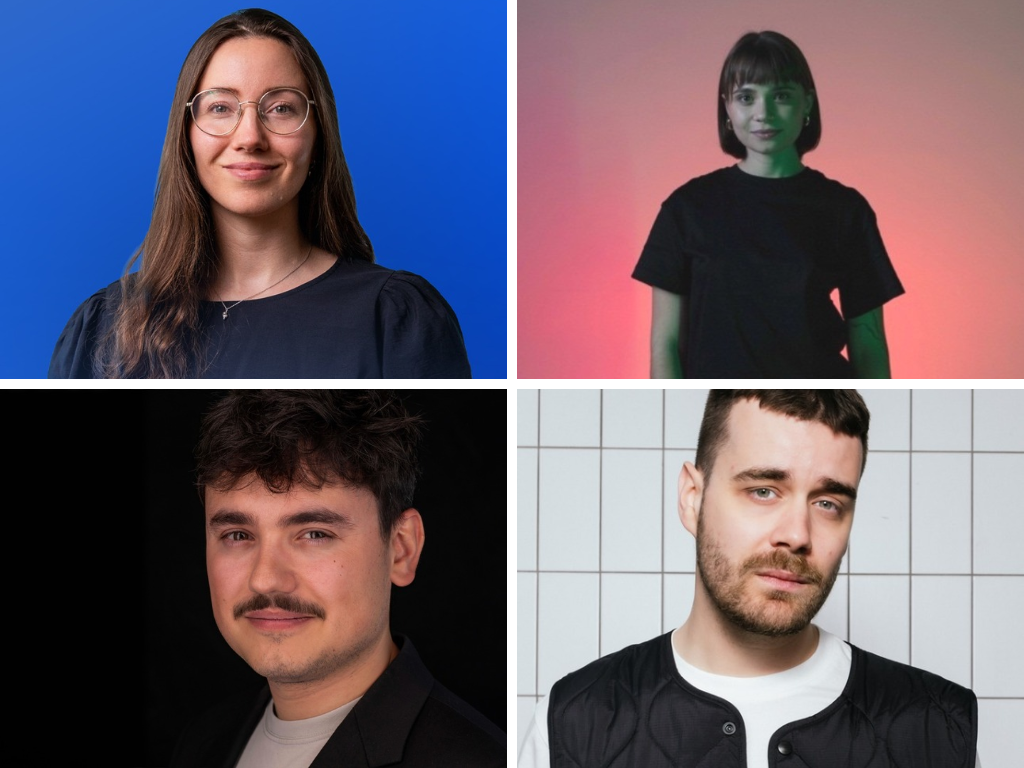
Hey Fomo, Refresher, and the Czech Television project tak.moment are among the media platforms that create content tailored to a young audience. Together with the creators and editors, we’ll take a look at how they think about their target audiences, choose topics, test new formats, and evaluate their success. We’ll discuss what resonates with Gen Z today, how trust is built on social media, and why some topics take off while others get lost in the feed. The program will also include a hands-on “newsroom lab,” where participants will transform their own scientific topic into a concrete content proposal for a young audience and receive feedback directly from media guests.
- Host: Lucie Zajda, communication specialist at the Faculty of Social Sciences, Charles University, and host of the program Nádech on Radio Wave (Czech Radio)
Speakers
- Anna Mikušová, editor-in-chief of tak.moment (Czech Television)
- Adam Smeták, editor-in-chief of Hey Fomo
- Vojtěch Tkáč, editor-in-chief of Refresher